Maltose syrup does two jobs in confectionery that sucrose cannot manage on its own: it holds crystallisation in check and it builds the chew that carries a sweet through packaging, transport and months on a shelf. Both outcomes depend on how maltose behaves at high solids, which is why the grade you buy and the way you dose it matter more than the headline price per tonne.
What maltose brings that sucrose does not
Maltose syrup is a refined starch hydrolysate whose solids are a blend of maltose, maltotriose, glucose and larger saccharides. That blend is the point. Sucrose is a single, highly crystallisable molecule; a syrup with several sugars dissolved in the same water resists orderly crystal formation because the different molecules interfere with one another’s lattice.
High-maltose grades, commonly 40 to 60 percent maltose on a dry basis, also taste markedly less sweet than sucrose, often quoted at roughly 0.4 to 0.6 of sucrose’s sweetness. In a chewy sweet this is an advantage: you can add bulk and body without pushing the product into cloying territory.
Controlling crystallisation
Graining, or the appearance of a sandy texture, happens when sucrose in a supersaturated mass is allowed to form crystals. The classic remedy is doctoring with a glucose or maltose syrup. The syrup’s non-sucrose solids interrupt the sucrose lattice and raise the concentration at which crystals can grow.
The practical lever is the ratio of sucrose to syrup solids. Many chewy formulas start somewhere around 30 to 50 percent of total sugar solids coming from syrup, then adjust upward if the batch still grains or downward if it becomes too soft or too hygroscopic. A high-maltose syrup tends to be less hygroscopic than a high-dextrose one, so it helps a sweet stay dry on the surface rather than weeping in humid conditions.
Building chew, not hardness
Chew is a balance between residual moisture, sugar composition and final cook temperature. Water content controls whether the mass sets glassy or leathery: cook it hotter and you get a hard, brittle candy; pull it slightly cooler and the same recipe turns chewy. Maltose’s lower tendency to crystallise lets you keep more water in the matrix without risking grain, which is how it supports a long, clean chew.
Maltose also slows the hardening that otherwise turns a soft sweet brittle over time, so texture holds on the shelf.
Matching the syrup to the sweet
Different confections want different balances. The table below is a starting point, not a rule; always confirm on your own equipment.
| Candy type | Typical syrup share of sugar solids | What maltose contributes |
|---|---|---|
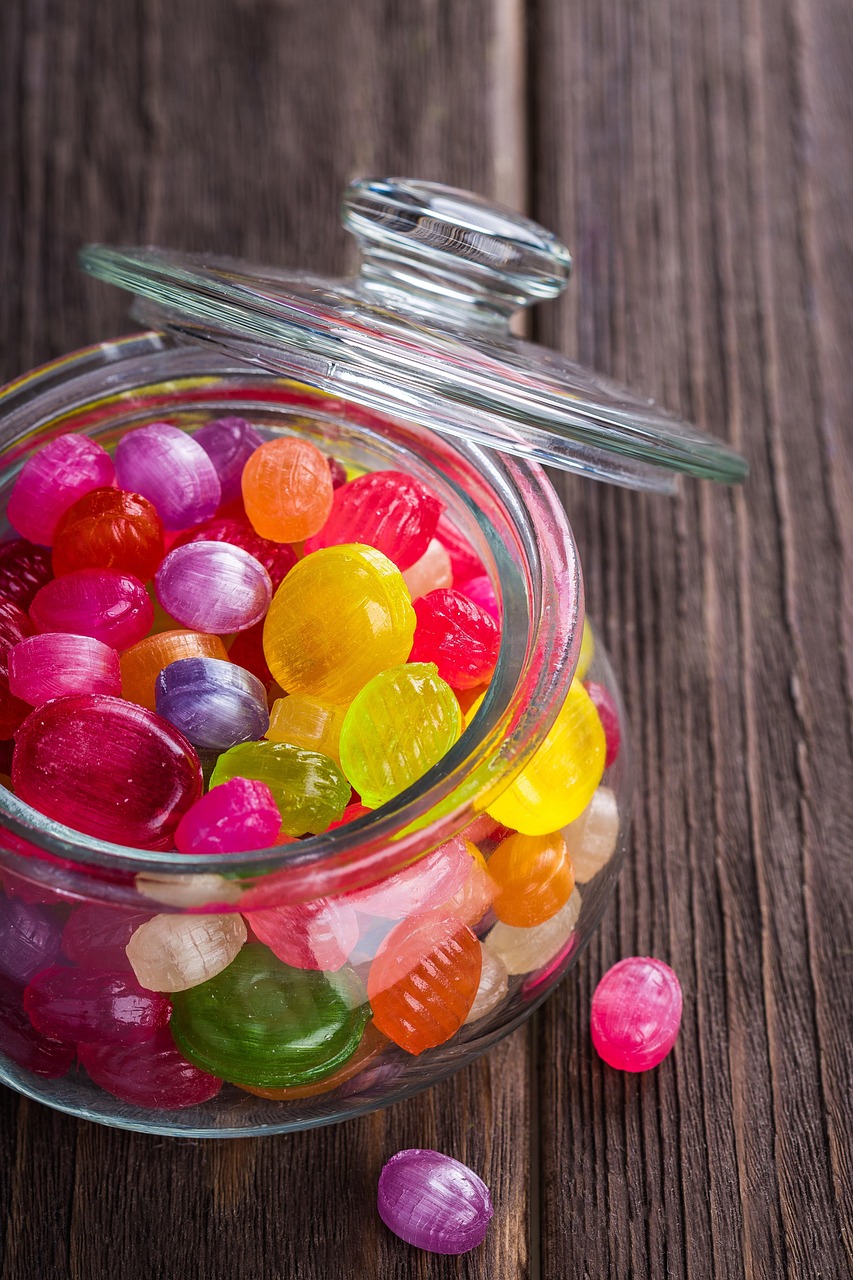
| Hard candy | 30 to 50 percent | Prevents graining, keeps the glass clear |
| Chewy gummies | 30 to 45 percent | Elastic bite, reduced surface stickiness |
| Nougat | 25 to 40 percent | Soft, aerated chew that holds shape |
| Toffee and caramel | 20 to 35 percent | Limits crystallisation and cold flow |
Defects and what they signal
- Graining: too little doctoring syrup, or seed crystals from dirty equipment or scrap rework.
- Stickiness and weeping: syrup grade too hygroscopic, or insufficient cook to the target solids.
- Cold flow: too much residual moisture and too soft a set.
- Excess colour: overheating, long hold times or a high-dextrose syrup that browns readily.
Handling on the line
Maltose syrup is viscous and dense; it is easier to pump and meter when kept warm, typically around 25 to 35 degrees Celsius, though prolonged high-temperature holding will darken it. Add the syrup early enough to dissolve completely before the boil, weigh it rather than estimating by volume, and keep transfer lines clear of dried material that could seed a batch.
Frequently Asked Questions
Does maltose syrup make candy sweeter or less sweet?
Less sweet. Its relative sweetness is commonly around 0.4 to 0.6 of sucrose, so it adds body and chew while letting you control total sweetness with the sucrose fraction.
How much syrup should I use to stop graining?
A common starting window is 30 to 50 percent of the sugar solids, then adjust. Too little risks crystals; too much can soften the sweet and increase cold flow.
Can I simply swap sugar for maltose syrup by weight?
No. The syrup carries water and is less sweet, so you need to adjust both the water balance and the sucrose level to hit the same texture and taste.
Why did my batch turn dark and sticky?
Darkening usually points to overheating or a high-dextrose syrup, while stickiness suggests too much moisture or a grade that picks up humidity. Check cook temperature, final solids and syrup type together.
💬 Join the conversation! What do you think about this topic? Leave a comment below — we read and reply to every message.
⬇️📋 Multilingual reply templates — copy & paste
Replace [country] and [topic] before posting.
- EnglishGreat post! We are a buyer from [country] interested in [topic]. Could you share pricing and MOQ details? Thank you!
- Spanish¡Gran artículo! Somos compradores de [país] interesados en [tema]. ¿Podrían compartir precios y cantidades mínimas? ¡Gracias!
- GermanToller Beitrag! Wir sind Käufer aus [Land] und interessieren uns für [Thema]. Könnten Sie Preise und Mindestbestellmengen mitteilen? Vielen Dank!
- FrenchExcellent article ! Nous sommes acheteurs de [pays] intéressés par [sujet]. Pourriez-vous partager les prix et les quantités minimales ? Merci !
- PortugueseÓtimo artigo! Somos compradores de [país] interessados em [tema]. Poderiam informar preços e quantidades mínimas? Obrigado!
- DutchMooi artikel! Wij zijn kopers uit [land] en geïnteresseerd in [onderwerp]. Kunt u prijzen en minimale afnamehoeveelheden delen? Bedankt!
- PolishŚwietny artykuł! Jesteśmy kupcami z [kraj] zainteresowanymi tematem [temat]. Czy moglibyście podać ceny i minimalne ilości? Dziękujemy!
- RussianОтличная статья! Мы покупатели из [страна], заинтересованы в [тема]. Могли бы вы сообщить цены и минимальный объём заказа? Спасибо!
- Japanese素晴らしい記事です![国] のバイヤーです。[トピック] に興味があります。価格と最小発注量を教えていただけますか?ありがとうございます!
- Korean좋은 글입니다! [국가]에서 온 구매자입니다. [주제]에 관심이 있습니다. 가격과 최소 주문 수량을 알려주시겠어요? 감사합니다!
- Thaiบทความดีมาก! เราคือผู้ซื้อจาก [ประเทศ] สนใจ [หัวข้อ] ช่วยแจ้งราคาและจำนวนสั่งซื้อขั้นต่ำได้ไหม ขอบคุณครับ!
- Hebrewפוסט מעולה! אנו קונים מ-[מדינה] ומתעניינים ב-[נושא]. תוכלו לשתף מחירים וכמויות מינימום? תודה!
- VietnameseBài viết hay! Chúng tôi là người mua từ [quốc gia] quan tâm đến [chủ đề]. Bạn có thể chia sẻ giá và số lượng tối thiểu không? Cảm ơn!
- IndonesianArtikel yang bagus! Kami pembeli dari [negara] tertarik pada [topik]. Bisakah Anda berbagi harga dan jumlah minimum? Terima kasih!
- Arabicمقال رائع! نحن مشترون من [الدولة] مهتمون بـ [الموضوع]. هل يمكنكم مشاركة الأسعار والحد الأدنى للكمية؟ شكرًا!
- KazakhКеремет мақала! Біз [ел] сатып алушыларымыз, [тақырып] қызықтырады. Баға мен ең аз тапсырыс көлемін айта аласыз ба? Рахмет!