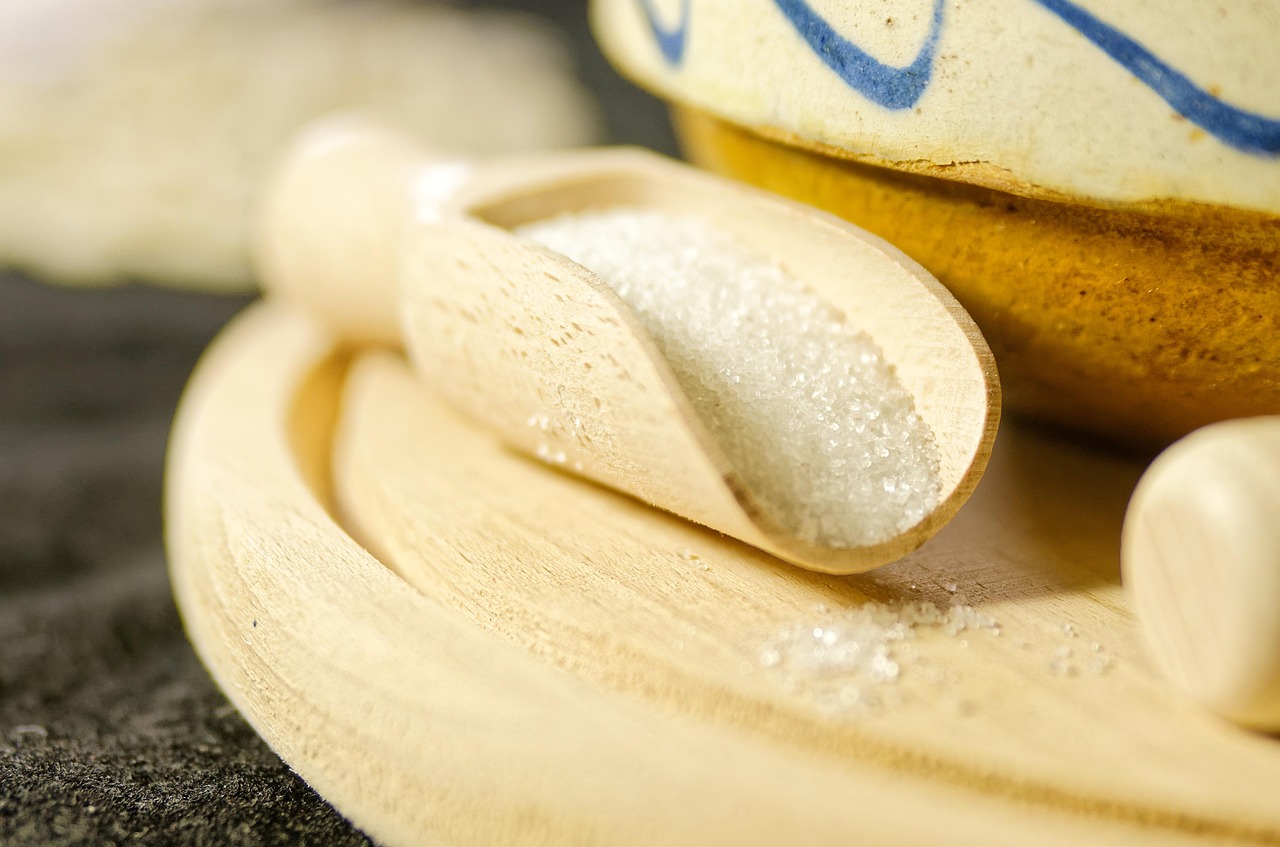
Food-grade sorbitol powder is a specification-driven purchase, and the quickest way to lose money is to buy against a generic catalogue sheet. The powder is the crystallised form of D-glucitol, a six-carbon polyol made by hydrogenating glucose under pressure and then refining, drying and milling the resulting syrup. Because one chemical name covers several purities and particle profiles, every shipment should be matched to the exact specification the finished product needs.
What the Food-Grade Label Really Confirms
A food-grade designation is a statement about compliance rather than a single number. It signals that the material was produced under a documented food-safety system, that contaminant levels sit inside recognised limits, and that the paperwork supports the claim. It says nothing about assay, moisture, particle size or reducing-sugar content. Those are separate commercial decisions, and they are the ones that decide whether a delivered lot behaves like the approval sample.
Parameters Worth Writing Into the Specification
Buyers get the best results when the purchase order lists numeric limits, the test method behind each one, and the action to take if a lot falls outside. The table below shows the parameters that cause the most disputes in practice.
| Parameter | Indicative range | Practical impact |
|---|---|---|
| Assay (dry basis) | typically 97% or higher for powder | functional strength and dosing accuracy |
| Water content | commonly at or below 1.5% | caking, flow and shelf life |
| Reducing sugars | around 0.2% or lower | colour stability under heat |
| Particle size | graded to suit the blend | mixing, dusting and mouthfeel |
| Heavy metals | within pharmacopoeial limits | safety and market access |
| pH (in solution) | near neutral, commonly 5.0 to 7.5 | compatibility with other ingredients |
| Conductivity or ash | low | refining quality and taste |
Each line should carry an acceptance rule. Descriptions such as “white powder” cannot be enforced; a colour reading, a sieve range and a moisture ceiling can.
Testing Methods Buyers Should Expect
Reliable producers run the same core panel on every lot, and the method matters as much as the number it produces.
- Assay is normally confirmed by HPLC or a validated titration and reported on a dry basis, so residual moisture does not flatter the result.
- Moisture is measured by loss on drying or Karl Fischer titration, and the two can differ slightly on the same sample.
- Reducing sugars are checked with a colour-forming or chromatographic method to catch incomplete hydrogenation.
- Heavy metals are screened against the limit that applies to the destination market, using pharmacopoeial methods where pharmaceutical use is possible.
- Microbiology covers total plate count, yeasts and moulds, and specified pathogens depending on the end application.
How to Read a Certificate of Analysis
A useful certificate is lot-specific and complete. Check that the lot number matches the packing list, that the assay is tied to a named method, and that every result sits inside the limits you agreed. Compare each arriving lot with the retained approval sample, and keep a counter-sample from every delivery so a claim can be settled with evidence rather than memory. Repeated missing data, or a certificate that shows only “representative” values, is better read as a capability signal than as a paperwork gap.
Sampling, Storage and Handling
Powder is hygroscopic, so it should stay sealed until use and be kept cool and dry. Sampling should follow a written plan: take increments from several positions in the lot, combine them, and quarter them down to a laboratory sample. Record temperature and humidity where the material is stored, because caking often begins well before it becomes visible in the bag.
Frequently Asked Questions
Is food-grade sorbitol the same as pharmaceutical grade?
They share a chemical identity but not a specification. The pharmaceutical grade adds tighter limits on heavy metals and related substances and calls for GMP evidence, so it should be ordered only when the end use genuinely requires it.
Why does moisture matter so much in a powder?
Higher moisture encourages caking, reduces flow in dry blends and can shorten shelf life. Holding it at or below the agreed ceiling is one of the simplest ways to protect batch-to-batch consistency.
Can a single certificate cover several batches?
No. Ask for a lot-specific certificate. A combined or averaged document makes it impossible to trace a quality problem back to the material that caused it.
What particle size should I specify?
Choose the grade that matches the process: a finer powder disperses quickly in dry mixes, while a coarser, free-flowing grade reduces dust and segregation. Confirm the sieve range with the supplier before running the trial.
💬 Join the conversation! What do you think about this topic? Leave a comment below — we read and reply to every message.
⬇️📋 Multilingual reply templates — copy & paste
Replace [country] and [topic] before posting.
- EnglishGreat post! We are a buyer from [country] interested in [topic]. Could you share pricing and MOQ details? Thank you!
- Spanish¡Gran artículo! Somos compradores de [país] interesados en [tema]. ¿Podrían compartir precios y cantidades mínimas? ¡Gracias!
- GermanToller Beitrag! Wir sind Käufer aus [Land] und interessieren uns für [Thema]. Könnten Sie Preise und Mindestbestellmengen mitteilen? Vielen Dank!
- FrenchExcellent article ! Nous sommes acheteurs de [pays] intéressés par [sujet]. Pourriez-vous partager les prix et les quantités minimales ? Merci !
- PortugueseÓtimo artigo! Somos compradores de [país] interessados em [tema]. Poderiam informar preços e quantidades mínimas? Obrigado!
- DutchMooi artikel! Wij zijn kopers uit [land] en geïnteresseerd in [onderwerp]. Kunt u prijzen en minimale afnamehoeveelheden delen? Bedankt!
- PolishŚwietny artykuł! Jesteśmy kupcami z [kraj] zainteresowanymi tematem [temat]. Czy moglibyście podać ceny i minimalne ilości? Dziękujemy!
- RussianОтличная статья! Мы покупатели из [страна], заинтересованы в [тема]. Могли бы вы сообщить цены и минимальный объём заказа? Спасибо!
- Japanese素晴らしい記事です![国] のバイヤーです。[トピック] に興味があります。価格と最小発注量を教えていただけますか?ありがとうございます!
- Korean좋은 글입니다! [국가]에서 온 구매자입니다. [주제]에 관심이 있습니다. 가격과 최소 주문 수량을 알려주시겠어요? 감사합니다!
- Thaiบทความดีมาก! เราคือผู้ซื้อจาก [ประเทศ] สนใจ [หัวข้อ] ช่วยแจ้งราคาและจำนวนสั่งซื้อขั้นต่ำได้ไหม ขอบคุณครับ!
- Hebrewפוסט מעולה! אנו קונים מ-[מדינה] ומתעניינים ב-[נושא]. תוכלו לשתף מחירים וכמויות מינימום? תודה!
- VietnameseBài viết hay! Chúng tôi là người mua từ [quốc gia] quan tâm đến [chủ đề]. Bạn có thể chia sẻ giá và số lượng tối thiểu không? Cảm ơn!
- IndonesianArtikel yang bagus! Kami pembeli dari [negara] tertarik pada [topik]. Bisakah Anda berbagi harga dan jumlah minimum? Terima kasih!
- Arabicمقال رائع! نحن مشترون من [الدولة] مهتمون بـ [الموضوع]. هل يمكنكم مشاركة الأسعار والحد الأدنى للكمية؟ شكرًا!
- KazakhКеремет мақала! Біз [ел] сатып алушыларымыз, [тақырып] қызықтырады. Баға мен ең аз тапсырыс көлемін айта аласыз ба? Рахмет!