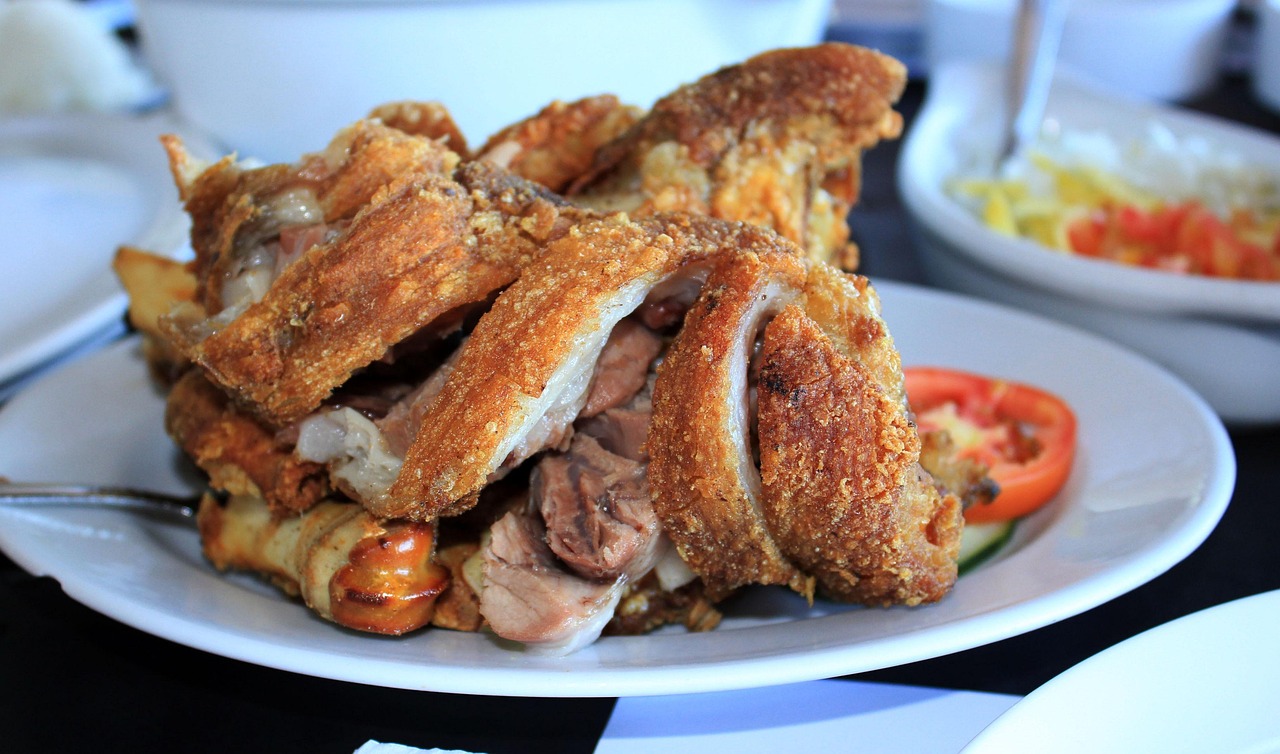
Sending chicharon into Asian markets is less a frying problem than a packaging and paperwork problem. The snack itself is straightforward: pork skin that is simmered, dehydrated and fried until it puffs into a brittle, savoury crisp. What decides whether a shipment sells through is whether the packs still crunch on the shelf and whether the labels satisfy each importing country’s retail and food rules. Exporters who plan packaging and labelling at the quotation stage avoid the costly rework that follows a rejected container.
Packaging formats that suit Asian retail
Snack aisles across the region are dominated by small, single-serve formats, but the right pack depends on the channel. Convenience stores favour sachets and small pouches at accessible price points, supermarkets stock mid-size pouches and sharing tubs, and online sellers lean toward multi-pack bundles that need outer protection. Whatever the format, the pack must do three jobs at once: keep moisture out, slow oil oxidation, and survive stacking and vibration inside a container.
- Single-serve sachets (commonly 20–40 g) for impulse and convenience channels.
- Sharing pouches (around 80–150 g) for supermarkets and family consumption.
- Rigid tubs and trays for premium gifting and party occasions.
- Multi-pack cartons for online and wholesale bundles.
Barrier materials and moisture control
Fried pork skin is hygroscopic: it draws moisture from humid air and loses its crunch quickly, which is a particular risk in tropical supply chains. A high-barrier laminate, often metallised film or a foil-containing structure, slows that transfer. Where budget allows, nitrogen flushing displaces oxygen and reduces oxidation of the frying oil, the second great enemy of shelf life. Headspace should be kept modest, and seal integrity should be tested rather than assumed. A pack that passes a lab test but fails a pallet test is not yet ready for export.
Labelling elements buyers and regulators check
Labelling is where export programmes most often stall, because a label approved for one market is rarely acceptable in another. Retailers and regulators tend to look for a consistent set of declarations, and the format varies by country.
| Label element | Why it matters at retail |
|---|---|
| Product name and descriptor | Matches the buyer’s category listing |
| Net weight | Products are priced and audited by weight |
| Ingredient and allergen list | Consumer safety and customs checks |
| Country of origin | Duty treatment and origin rules |
| Importer or manufacturer details | Traceability and recall contact |
| Batch code and date mark | Stock rotation and shelf-life control |
| Nutrition panel | Increasingly expected, with format varying by market |
Language, units and certification
Language rules differ widely. Some markets require the local language, others accept English, and many expect both. Metric units are the norm, though a few destinations still want a dual net-weight declaration. Halal certification matters for Muslim-majority markets, while others may request specific health or import certificates. Because chicharon is a meat product, veterinary or sanitary certification is frequently required, and the exact wording is best confirmed with a customs broker before any artwork is printed.
Documentation that should travel with the goods
- Product specification agreed and signed by both parties.
- Certificate of analysis covering moisture, oil quality and microbiological results.
- Packaging declaration naming the film structure and food-contact compliance.
- Health, sanitary or halal certificates where the destination requires them.
- Commercial invoice, packing list and the correct tariff classification.
Matching packaging to distribution reality
Packaging choices should reflect how the product will actually move, not how it looks in a sample room. A pouch that appears premium on a spreadsheet can crush on a pallet if the outer carton is under-specified, and a thin film can surrender to humidity during a tropical transshipment. Exporters who run a full pallet through the real route, rather than testing a single pack in a lab, catch most of these failures while they are still cheap to fix. The retail buyer, after all, is judging the pack that arrives on the shelf, not the one that left the factory.
Frequently Asked Questions
What pack sizes work best for Asian retail?
Single-serve sachets around 20–40 g suit convenience and impulse channels, while 80–150 g pouches and sharing tubs work for supermarkets. The best size follows the channel’s price point rather than a single standard.
Does chicharon need nitrogen flushing?
It is not universal, but flushing helps where shelf life is long or transit is hot, because displacing oxygen slows oxidation of the frying oil. A strong moisture barrier remains the priority.
Which certificates are usually required for export?
Requirements vary, but meat-based snacks often need sanitary or veterinary certification, and halal certificates are important for Muslim-majority markets. Confirm the exact list with an importer or customs broker before shipping.
Can one label be used across several countries?
Rarely without adaptation. Language, nutrition format, allergen wording and date marking often differ, so most exporters prepare market-specific artwork rather than a universal label.
💬 Join the conversation! What do you think about this topic? Leave a comment below — we read and reply to every message.
⬇️📋 Multilingual reply templates — copy & paste
Replace [country] and [topic] before posting.
- EnglishGreat post! We are a buyer from [country] interested in [topic]. Could you share pricing and MOQ details? Thank you!
- Spanish¡Gran artículo! Somos compradores de [país] interesados en [tema]. ¿Podrían compartir precios y cantidades mínimas? ¡Gracias!
- GermanToller Beitrag! Wir sind Käufer aus [Land] und interessieren uns für [Thema]. Könnten Sie Preise und Mindestbestellmengen mitteilen? Vielen Dank!
- FrenchExcellent article ! Nous sommes acheteurs de [pays] intéressés par [sujet]. Pourriez-vous partager les prix et les quantités minimales ? Merci !
- PortugueseÓtimo artigo! Somos compradores de [país] interessados em [tema]. Poderiam informar preços e quantidades mínimas? Obrigado!
- DutchMooi artikel! Wij zijn kopers uit [land] en geïnteresseerd in [onderwerp]. Kunt u prijzen en minimale afnamehoeveelheden delen? Bedankt!
- PolishŚwietny artykuł! Jesteśmy kupcami z [kraj] zainteresowanymi tematem [temat]. Czy moglibyście podać ceny i minimalne ilości? Dziękujemy!
- RussianОтличная статья! Мы покупатели из [страна], заинтересованы в [тема]. Могли бы вы сообщить цены и минимальный объём заказа? Спасибо!
- Japanese素晴らしい記事です![国] のバイヤーです。[トピック] に興味があります。価格と最小発注量を教えていただけますか?ありがとうございます!
- Korean좋은 글입니다! [국가]에서 온 구매자입니다. [주제]에 관심이 있습니다. 가격과 최소 주문 수량을 알려주시겠어요? 감사합니다!
- Thaiบทความดีมาก! เราคือผู้ซื้อจาก [ประเทศ] สนใจ [หัวข้อ] ช่วยแจ้งราคาและจำนวนสั่งซื้อขั้นต่ำได้ไหม ขอบคุณครับ!
- Hebrewפוסט מעולה! אנו קונים מ-[מדינה] ומתעניינים ב-[נושא]. תוכלו לשתף מחירים וכמויות מינימום? תודה!
- VietnameseBài viết hay! Chúng tôi là người mua từ [quốc gia] quan tâm đến [chủ đề]. Bạn có thể chia sẻ giá và số lượng tối thiểu không? Cảm ơn!
- IndonesianArtikel yang bagus! Kami pembeli dari [negara] tertarik pada [topik]. Bisakah Anda berbagi harga dan jumlah minimum? Terima kasih!
- Arabicمقال رائع! نحن مشترون من [الدولة] مهتمون بـ [الموضوع]. هل يمكنكم مشاركة الأسعار والحد الأدنى للكمية؟ شكرًا!
- KazakhКеремет мақала! Біз [ел] сатып алушыларымыз, [тақырып] қызықтырады. Баға мен ең аз тапсырыс көлемін айта аласыз ба? Рахмет!