Few snack categories carry as much naming confusion as fried pork skin. The same basic product can appear on a shelf as chicharon, pork rinds or cracklings, and shoppers rarely agree on where one term ends and another begins. For importers and brand owners the confusion is not merely academic: the name printed on a pack influences which consumer expects it, which regulations apply and how it is shelved. This article untangles the terms and the market differences behind them.
One Product, Several Traditions
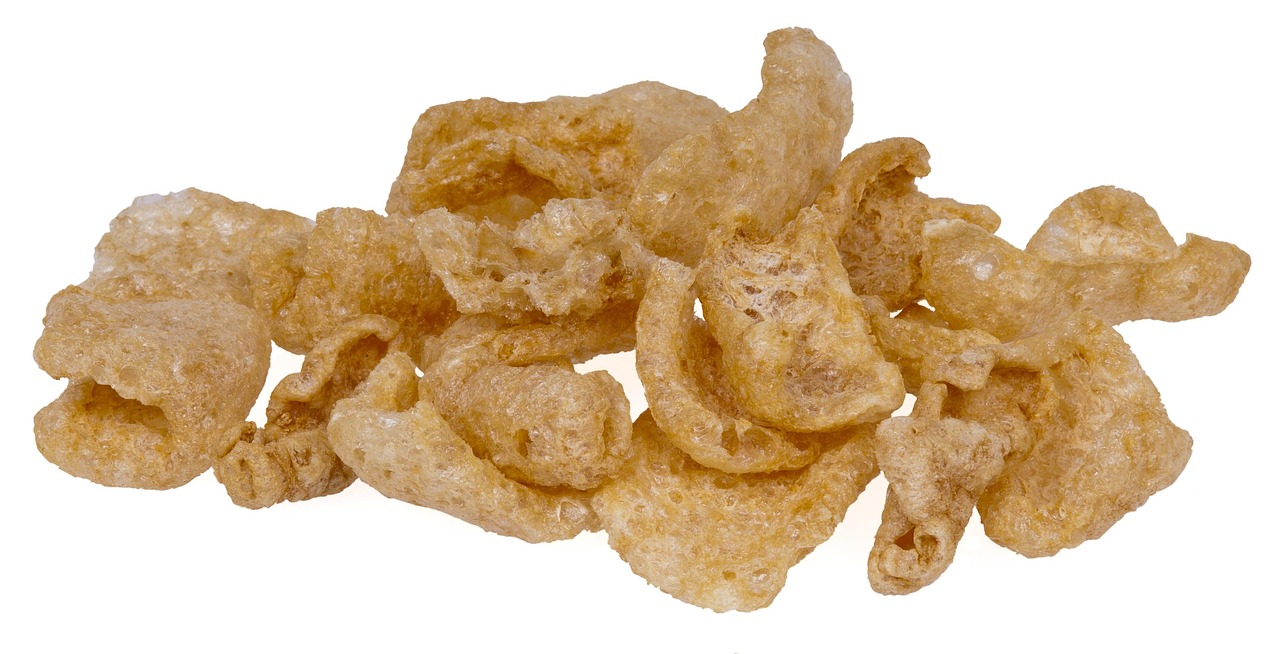
All three names describe pork skin that has been cooked, dried and then fried or roasted until it puffs. The differences lie in preparation detail, fat content, regional tradition and the language of the market where the snack is sold. There is no single global standard that fixes the boundaries, so definitions overlap and are often used loosely.
A Practical Naming Map
The table below summarises how the terms are most commonly used across major markets. Treat it as a working guide rather than a legal definition, because local usage varies and some producers use the names interchangeably.
| Term | Common market | Typical character |
|---|---|---|
| Chicharon | Philippines, and diaspora stores | Puffed, crisp, often seasoned; can be pork or other skin |
| Pork rinds | United States, Northern Europe | Puffed, light, salted; a broad retail category |
| Cracklings | Southern US, parts of Europe | Denser, sometimes with more attached fat |
| Chicharron | Latin America, Spain | Varies widely; can be thick or thin, fried or roasted |
Chicharon: The Philippine Benchmark
In Philippine usage, chicharon is the everyday word for puffed, fried pork skin, sold in sachets, tubs and bulk packs and eaten as a bar snack or alongside meals. The term has travelled with Filipino communities, so it now labels products in the United States, the Gulf, Canada and beyond. A Filipino consumer buying chicharon usually expects a light, crisp bite with a clean snap; the flavour range is broad and may include plain salted, vinegar, chilli and garlic variants.
Pork Rinds: The American Category
In the United States, pork rinds is the umbrella term for the same style of puffed snack. The category is large and mainstream, and it frequently appears in high-protein and low-carbohydrate marketing because the product is naturally high in protein and low in carbohydrate. American consumers tend to expect a uniform, pale puff with salt, though flavoured lines have expanded considerably.
Cracklings: Denser and Fattier
Cracklings traditionally refers to pieces of pork skin with more fat attached, cooked until crisp but not necessarily puffed into the airy foam of a classic rind. The result is heavier, more savoury and often chewier. In some markets the word is applied to the crisp residue left after rendering lard, which is a different product again. This is where most cross-market confusion originates.
Why the Difference Matters Commercially
The label you choose shapes consumer expectation, shelf placement and sometimes the regulatory route. A product sold as a puffed rind and one sold as a rendered crackling may sit under different tariff codes, carry different nutrition panels and attract different buyers. Getting the naming right protects you from returns and from misleading-consumer claims.
- Texture promise: a puffed rind implies a light crunch; a crackling implies a denser bite.
- Nutrition framing: puffed rinds are often marketed on protein content; cracklings carry more fat.
- Shelf position: the same snack may be merchandised as a bar snack, a protein snack or an ingredient.
- Regulation: meat-snack rules and import requirements can hinge on the product description.
Ingredients and Formulation Angles
Beyond the pork-skin base, the names also imply different flavour systems. Chicharon in its home market leans toward vinegar, garlic, chilli and salt, sometimes with a dipping vinegar on the side. American pork rinds favour salt, barbecue and sour-cream styles. Latin American chicharron may be served with lime and hot sauce. These are clues for product developers deciding which seasoning profile will feel authentic in a given market.
Choosing the Right Term for Your Market
Match the name to the consumer, not to the factory’s internal language. If your target shopper is a Filipino household, chicharon will signal the right snacking occasion. If you are selling a protein-forward snack through mainstream American retail, pork rinds is the term most shoppers scan for. Where both communities are present, some brands use a dual descriptor on the front panel and explain the process on the back.
Frequently Asked Questions
Are chicharon and pork rinds exactly the same product?
In practice they are very closely related and often interchangeable, made by simmering, drying and puffing pork skin. The main differences are regional naming, seasoning tradition and the market context in which they are sold.
What makes cracklings different from a puffed rind?
Cracklings usually contain more attached fat and are denser and chewier, while puffed rinds are lighter and more airy. Some markets also use the word for the crisp residue left after rendering lard.
Does the name affect import classification?
It can. Different descriptions may attract different tariff codes or meat-product requirements. Confirm the correct product description with your customs broker or import specialist before shipping.
Can one product carry two names on the label?
Yes, some brands use a primary term for the main consumer and a secondary descriptor for other communities. Ensure the wording is accurate and does not mislead about the process or ingredients.
💬 Join the conversation! What do you think about this topic? Leave a comment below — we read and reply to every message.
⬇️📋 Multilingual reply templates — copy & paste
Replace [country] and [topic] before posting.
- EnglishGreat post! We are a buyer from [country] interested in [topic]. Could you share pricing and MOQ details? Thank you!
- Spanish¡Gran artículo! Somos compradores de [país] interesados en [tema]. ¿Podrían compartir precios y cantidades mínimas? ¡Gracias!
- GermanToller Beitrag! Wir sind Käufer aus [Land] und interessieren uns für [Thema]. Könnten Sie Preise und Mindestbestellmengen mitteilen? Vielen Dank!
- FrenchExcellent article ! Nous sommes acheteurs de [pays] intéressés par [sujet]. Pourriez-vous partager les prix et les quantités minimales ? Merci !
- PortugueseÓtimo artigo! Somos compradores de [país] interessados em [tema]. Poderiam informar preços e quantidades mínimas? Obrigado!
- DutchMooi artikel! Wij zijn kopers uit [land] en geïnteresseerd in [onderwerp]. Kunt u prijzen en minimale afnamehoeveelheden delen? Bedankt!
- PolishŚwietny artykuł! Jesteśmy kupcami z [kraj] zainteresowanymi tematem [temat]. Czy moglibyście podać ceny i minimalne ilości? Dziękujemy!
- RussianОтличная статья! Мы покупатели из [страна], заинтересованы в [тема]. Могли бы вы сообщить цены и минимальный объём заказа? Спасибо!
- Japanese素晴らしい記事です![国] のバイヤーです。[トピック] に興味があります。価格と最小発注量を教えていただけますか?ありがとうございます!
- Korean좋은 글입니다! [국가]에서 온 구매자입니다. [주제]에 관심이 있습니다. 가격과 최소 주문 수량을 알려주시겠어요? 감사합니다!
- Thaiบทความดีมาก! เราคือผู้ซื้อจาก [ประเทศ] สนใจ [หัวข้อ] ช่วยแจ้งราคาและจำนวนสั่งซื้อขั้นต่ำได้ไหม ขอบคุณครับ!
- Hebrewפוסט מעולה! אנו קונים מ-[מדינה] ומתעניינים ב-[נושא]. תוכלו לשתף מחירים וכמויות מינימום? תודה!
- VietnameseBài viết hay! Chúng tôi là người mua từ [quốc gia] quan tâm đến [chủ đề]. Bạn có thể chia sẻ giá và số lượng tối thiểu không? Cảm ơn!
- IndonesianArtikel yang bagus! Kami pembeli dari [negara] tertarik pada [topik]. Bisakah Anda berbagi harga dan jumlah minimum? Terima kasih!
- Arabicمقال رائع! نحن مشترون من [الدولة] مهتمون بـ [الموضوع]. هل يمكنكم مشاركة الأسعار والحد الأدنى للكمية؟ شكرًا!
- KazakhКеремет мақала! Біз [ел] сатып алушыларымыз, [тақырып] қызықтырады. Баға мен ең аз тапсырыс көлемін айта аласыз ба? Рахмет!