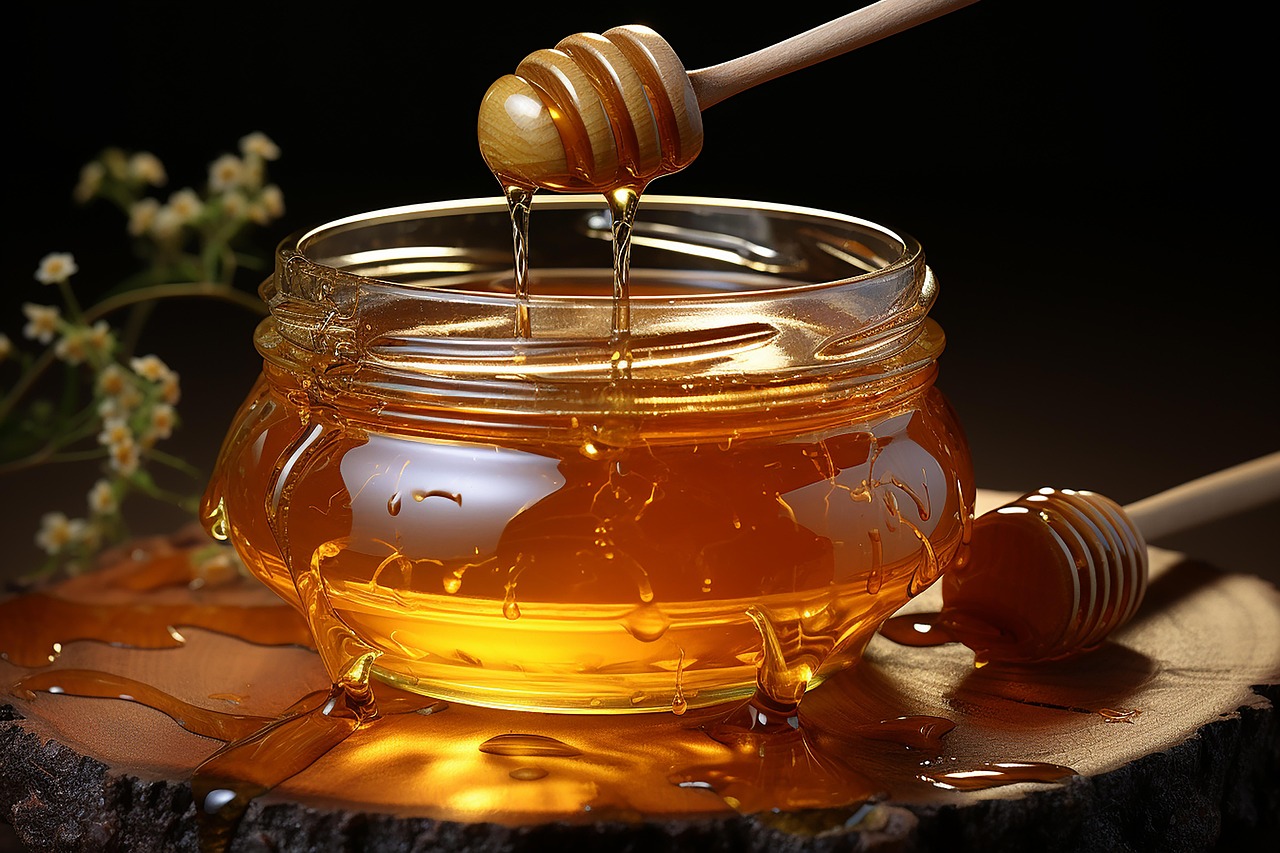
Maltose syrup earns its place in sauces and marinades for two reasons that have little to do with sweetness: it builds body, and it keeps a glaze looking wet and glossy long after the container has been opened. Formulators who understand how those two jobs are performed can tune gloss and cling almost independently of flavour.
What body means in a sauce system
Body is the perceived thickness and coating power of a sauce. A syrup at 75–84 °Brix contributes dissolved solids that raise viscosity without the gumminess starch can develop after retorting or repeated freeze–thaw cycles. Because maltose syrup is a blend of maltose, glucose and higher saccharides rather than a single sugar, it also lowers water activity in high-solids sauces, which supports microbiological stability and helps protect colour during storage.
Why a glaze stays glossy
Gloss is a surface effect. As a syrup-based glaze dries, the residual film has to stay smooth and slightly hygroscopic so it neither flakes nor turns matte. Maltose syrup holds moisture at the surface, keeping the film plastic. The practical result is a barbecue, teriyaki or hoisin-style coating that still looks freshly applied after weeks on the shelf, rather than a dull, crazed skin.
Matching the grade to the job
Two specification levers dominate performance. The first is dextrose equivalent (DE): lower-DE syrups are more viscous and less hygroscopic, which suits cling and slow moisture migration; higher-DE grades are more hygroscopic and brown faster under heat. The second is maltose content: higher-maltose fractions resist crystallisation and carry a cleaner, gentler sweetness that lets spice and acid notes through.
| Glaze goal | Grade direction | Practical note |
|---|---|---|
| Thick cling, low tack | Lower DE, higher maltose | Dose late so it does not over-thicken on cooling |
| Fast Maillard colour | Higher DE | Watch the pan edge for scorch |
| Clear, light marinade | High transmittance, low colour | Confirm colour on the batch COA |
| Freeze–thaw stability | Intermediate DE | Bench-test after two freeze–thaw cycles |
Where to add it in the process
Timing changes the outcome. In a cooked glaze, add the syrup near the end of the boil and after any acid, so you control darkening rather than discovering it. In a liquid marinade, hydrate the syrup with the water phase before introducing oil; this avoids a slick separation that only appears after a few days in the bottle. In emulsified sauces, treat it as a water-phase ingredient and adjust the stabiliser downwards once viscosity rises.
Stability checks worth running
- Viscosity at a fixed temperature and shear rate, so results are comparable between batches.
- Water activity and pH drift over accelerated storage.
- Colour measured instrumentally (L*a*b*) before and after a heat hold.
- Syneresis or separation in the pack after two weeks at ambient and one week chilled.
- Gloss retention on a dipped, dried coupon left in humid conditions.
These are cheap tests. They catch the expensive problems — a glaze that weeps in transit or a marinade that turns cloudy in the chiller — before a full batch is committed.
Specification and paperwork
Buy against a batch-specific certificate of analysis that states solids, DE, maltose on a dry basis, sulphated ash, pH, colour and the microbiological limits your market requires. Keep counter-samples so any dispute can be settled with evidence rather than recollection. A supplier who cannot produce a complete, batch-linked COA is telling you something about process control, and that signal matters more than a marginal price advantage.
Frequently Asked Questions
Does maltose syrup make a sauce taste much sweeter?
Only modestly. It delivers roughly 0.4–0.6 of the sweetness of sucrose, so it is best treated as a body and glaze ingredient with sweetness as a side effect. Adjust the sugar or sweetener separately.
Will it stop crystallisation in a honey-style glaze?
It reduces the risk because high-maltose syrups interfere with sucrose crystal growth, but it is not an unlimited cure. For sticky, clear glazes, choose a high-maltose, low-DE grade and test at your real storage temperature.
Can I use it in an acidic marinade?
Yes. Commercial grades are commonly stable in the pH 4–6 range, which covers most marinades. Acid and heat can slowly invert some sugars over a long shelf life, so verify colour and viscosity after accelerated storage.
How do I stop a glaze going tacky in humid weather?
Move toward a lower-DE grade, reduce free surface moisture, and balance the film with the rest of the solids system. A short humid-chamber test will show whether the coating stays clean or picks up dust.
💬 Join the conversation! What do you think about this topic? Leave a comment below — we read and reply to every message.
⬇️📋 Multilingual reply templates — copy & paste
Replace [country] and [topic] before posting.
- EnglishGreat post! We are a buyer from [country] interested in [topic]. Could you share pricing and MOQ details? Thank you!
- Spanish¡Gran artículo! Somos compradores de [país] interesados en [tema]. ¿Podrían compartir precios y cantidades mínimas? ¡Gracias!
- GermanToller Beitrag! Wir sind Käufer aus [Land] und interessieren uns für [Thema]. Könnten Sie Preise und Mindestbestellmengen mitteilen? Vielen Dank!
- FrenchExcellent article ! Nous sommes acheteurs de [pays] intéressés par [sujet]. Pourriez-vous partager les prix et les quantités minimales ? Merci !
- PortugueseÓtimo artigo! Somos compradores de [país] interessados em [tema]. Poderiam informar preços e quantidades mínimas? Obrigado!
- DutchMooi artikel! Wij zijn kopers uit [land] en geïnteresseerd in [onderwerp]. Kunt u prijzen en minimale afnamehoeveelheden delen? Bedankt!
- PolishŚwietny artykuł! Jesteśmy kupcami z [kraj] zainteresowanymi tematem [temat]. Czy moglibyście podać ceny i minimalne ilości? Dziękujemy!
- RussianОтличная статья! Мы покупатели из [страна], заинтересованы в [тема]. Могли бы вы сообщить цены и минимальный объём заказа? Спасибо!
- Japanese素晴らしい記事です![国] のバイヤーです。[トピック] に興味があります。価格と最小発注量を教えていただけますか?ありがとうございます!
- Korean좋은 글입니다! [국가]에서 온 구매자입니다. [주제]에 관심이 있습니다. 가격과 최소 주문 수량을 알려주시겠어요? 감사합니다!
- Thaiบทความดีมาก! เราคือผู้ซื้อจาก [ประเทศ] สนใจ [หัวข้อ] ช่วยแจ้งราคาและจำนวนสั่งซื้อขั้นต่ำได้ไหม ขอบคุณครับ!
- Hebrewפוסט מעולה! אנו קונים מ-[מדינה] ומתעניינים ב-[נושא]. תוכלו לשתף מחירים וכמויות מינימום? תודה!
- VietnameseBài viết hay! Chúng tôi là người mua từ [quốc gia] quan tâm đến [chủ đề]. Bạn có thể chia sẻ giá và số lượng tối thiểu không? Cảm ơn!
- IndonesianArtikel yang bagus! Kami pembeli dari [negara] tertarik pada [topik]. Bisakah Anda berbagi harga dan jumlah minimum? Terima kasih!
- Arabicمقال رائع! نحن مشترون من [الدولة] مهتمون بـ [الموضوع]. هل يمكنكم مشاركة الأسعار والحد الأدنى للكمية؟ شكرًا!
- KazakhКеремет мақала! Біз [ел] сатып алушыларымыз, [тақырып] қызықтырады. Баға мен ең аз тапсырыс көлемін айта аласыз ба? Рахмет!